Some time ago there was writing about Disney’s effect on language use. Expressions like pixie dust and Bambi’s eyes are, if not in every-day-use, familiar to everyone who has spent hours in front of the TV. Oxford English Dictionary has also adopted Winnie the Pooh characters as nouns. To mention one example, the adjective ‘Eeyorish’ can be used to describe a pessimistic person.
Cartoons and stories have a surprisingly wide influence in language use. Kids know their favorite series and movies by heart. Even getting older some expressions to remain. I find my self still quoting Bugs Bunny asking my friends “What’s up, Doc?” And what’s more, the language has such a strong relevance that seeing, to mention one example, the Simpsons dubbed into Spanish the whole series seems to be wrong. “Marge doesn’t speak that way, what has happened to Bart’s voice?”
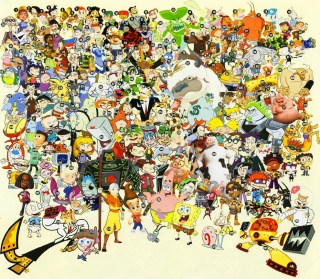 In my opinion, dubbing is like a double-edged sword. It is important to protect and use actively all the languages but the content transforms. It comes more local, more culture-bound which makes undubbed cartoons an entertaining and efficient way to learn a foreign language.
T-t-t-t-that’s all folks!
 AnotherOther
Leave a comment