Search

AnotherOther

#Work #Culture #Organizations #Languages

Category

Yleinen

Language super-TOP 10

Chinese, Spanish, English. That is the top 3. First due to an incomprehensible amount of speakers, second for colonialism and third thanks to globalization. Languages spread thanks to speakers. Speakers are born, they travel, interact with each other and with or without any intention, share their language with others. Languages live as long as they are used. 

This reminds me of the importance of maintaining the acquired language skill. If one already has made the effort and learned a new language, it would be a shame to lose that. Updating language skills can be fun and made with almost no effort. Read magazines, watch videos, meet new people. Anything but forget the language!

Start your day with a good morning in your mother tongue, chat a while with your international friends in language you share, write the shopping list in language you learned years ago to fresh your memory and keep the vocabulary active, watch a chapter of your favorite series in language you would like to learn and wish good night in one of the languages in danger to extinguish.

Oaidnaleapmái! (See you later in North Sami)

App to date!


Smartphones and tablets start to be a must. They are used to connect, for fun or for work. And for language learning 🙂 There are several applications available for eager language learners who want to improve their skills independently from time and place.

Why not learn Japanese in the metro, some French while waiting for a bus or get immersed with Italian enjoying a cappuccino in your local cafeteria. Technology brings us so many possibilities and “I have no time for language learning” is an outright excuse.


The way of saying things

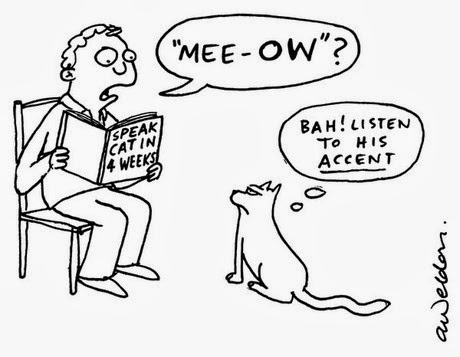
The accent matters. It tells where you have spent your time and the people you have been surrounded to. It can be your best friend or worst enemy. Difficult to get rid of but once mastered one can sound native without being it. In my opinion, an accent includes also a personality trait – it gives everybody a little something special.

What Languages Sound Like To Foreigners * do not take it literally *

Tracking down the origin

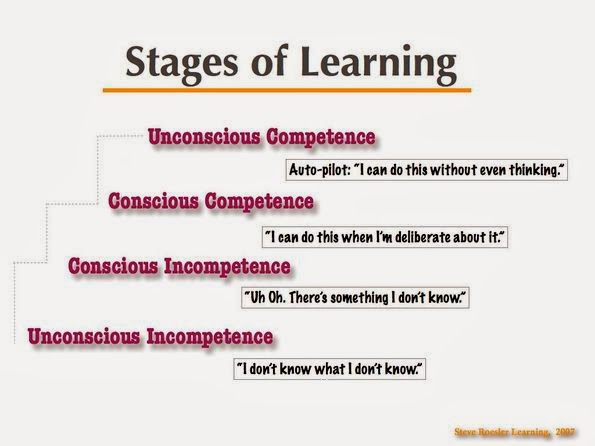
Sometimes I stop to savor the words and wonder about their origin. Actually, a great number of words we use daily have their origin in somewhere else. Tendencies are taken from cognate languages, or neighbor states, movies, music… The list can be endless. When eating habits change, new tendencies are incorporated into language as well. Sushi, for examplemmmm, it’s delicious and unobserved we know some Japanese 🙂 Language learning can indeed be unconscious.

Fun fact of the day; did you know that the word “taboo” is actually Tongan?

Give a try: Where did that word come from? – Quiz

Make it two, please!

I have never heard anybody to say: do not learn languages, it is a waste of time! Language learning has been boosted in almost every school system and for small counties, strong language policy is a must. Learning languages opens the world to you (and makes you smarter)! 

Here are some advantages listed by American Speech-Language-Hearing Association:

  • Being able to learn new words easily
  • Playing rhyming games with words like “cat” and “hat”
  • Breaking down words by sounds, such as C-A-T for cat
  • Being able to use information in new ways
  • Putting words into categories
  • Coming up with solutions to problems
  • Good listening skills
  • Connecting with others

The New York Time’s articleWhy Bilinguals Are Smarter

Bend and twist

I cannot generalize but I can speak with the voice of experience when I say Finnish is a living and creative language. I’m sure other languages are flexible too but with Finnish is.. well, playing in its own league. The system maintains supported thanks to regulated written Finnish.

In practice, there are so many dialects that sometimes I ask myself how on earth we understand each other.

Another really interesting aspect with Finnish is that it re-creates itself daily. Everyone can come up with a new expression and if it gains enough popularity, soon it spreads from one city to another.  In spoken language, everything goes! Eihä kukaa jaksa vaa pönöttää ku vois duunata jotaan muutaki, mennä vaik sufeelle.

One more to join the club


Too often news about dying languages are heard. Several minority languages are vanishing due to a lack of speakers. To mention one Sami language faces a dark future when young people emigrate to the south. Despite all the efforts in language teaching in primary school, Sami is spoken less and less. Still, the Government and countries’ language policy can make a huge difference in maintaining a language live.

However, unpredictable things happen in life – new languages are still born! In Australia, a language called Light Warlpiri is making it’s debut. Yei! 

 The New York Times’ article “A Village Invents a Language All Its Own”

False friends

Sometimes one gets over-confident about one’s language proficiency… There are words which sound familiar and known BUT, wrong, the actual meaning is completely another.

Most of the times the misunderstandings are funny and a possible conflict passes with a laugh.

However, be aware with some of these: Foreign-words-which-could-get-you-in-a-lot-of-trouble

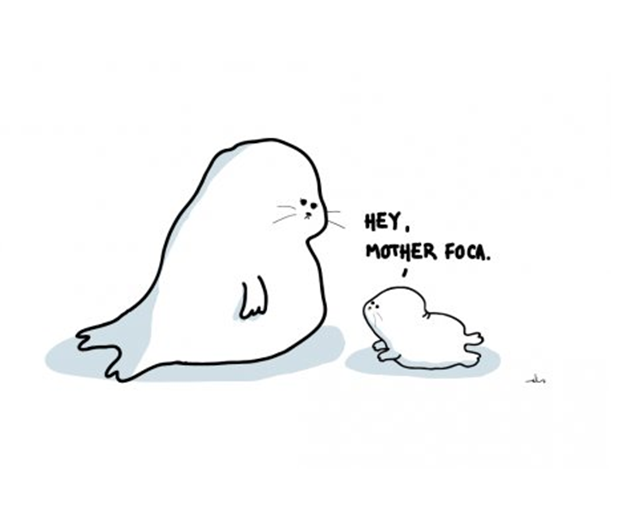
Hello mother seal.

“I hate Mondays.” – Garfield


Some time ago there was writing about Disney’s effect on language use. Expressions like pixie dust and Bambi’s eyes are, if not in every-day-use, familiar to everyone who has spent hours in front of the TV. Oxford English Dictionary has also adopted Winnie the Pooh characters as nouns. To mention one example, the adjective ‘Eeyorish’ can be used to describe a pessimistic person.

Cartoons and stories have a surprisingly wide influence in language use. Kids know their favorite series and movies by heart. Even getting older some expressions to remain. I find my self still quoting Bugs Bunny asking my friends “What’s up, Doc?” And what’s more, the language has such a strong relevance that seeing, to mention one example, the Simpsons dubbed into Spanish the whole series seems to be wrong. “Marge doesn’t speak that way, what has happened to Bart’s voice?”

In my opinion, dubbing is like a double-edged sword. It is important to protect and use actively all the languages but the content transforms. It comes more local, more culture-bound which makes undubbed cartoons an entertaining and efficient way to learn a foreign language.

T-t-t-t-that’s all folks!

Blog at WordPress.com.

Up ↑